Setup vpn extension microsoft edge 2026
'%2F%3E%3Ctext%20x%3D'50%25'%20y%3D'50%25'%20dy%3D'.35em'%20text-anchor%3D'middle'%20font-family%3D'-apple-system%2CBlinkMacSystemFont%2CSegoe%20UI%2Csystem-ui%2Csans-serif'%20font-size%3D'100'%20font-weight%3D'600'%20fill%3D'%23fff'%3ECM%3C%2Ftext%3E%3C%2Fsvg%3E)
Setup vpn extension microsoft edge: Quick Guide, Tips, and Best Extensions
- Quick fact: A VPN extension for Microsoft Edge can help you encrypt browser traffic, hide your IP, and access geo-restricted content without changing your device’s overall VPN settings.
- This guide covers: finding the right extension, installing it, configuring it for best security, troubleshooting common issues, and comparing popular options.
- formats included: step-by-step setup, comparison tables, tips, and an FAQ with 10+ questions.
Useful URLs and Resources text only:
- Microsoft Edge Extensions Overview - microsoft.com
- VPN Security Best Practices - us-cert.gov
- How to Choose a VPN - cnet.com
- Privacy and VPN Guidelines - eff.org
- General VPN Guide - wikipedia.org/wiki/Virtual_private_network
- HTTPS and Privacy Basics - en.wikipedia.org/wiki/HTTPS
- VPN Extension Comparison - techradar.com
- Top VPN Extensions for Browsers - tomsguide.com
- Cybersecurity for 2026 - itsecuritytoday.com
- Online Privacy Resources - privacyinternational.org
Why you might want a VPN extension in Edge
- Quick protection for browser traffic: The extension only shields traffic from Edge, not your entire device.
- Easy on/off: One click to enable, one click to disable.
- Access geo-blocked content: Hop servers in different countries to view region-locked sites.
- Often cheaper and faster to set up than a full VPN app.
Key features to look for
- Strong encryption AES-256 and secure protocols OpenVPN, WireGuard, or IKEv2.
- No-logs policy: Make sure they don’t store your browsing data.
- Leak protection: DNS, IPv6, and WebRTC leak prevention.
- Kill switch browser-level: Stops traffic if the extension disconnects.
- Easy server switching: A broad list of servers across many countries.
- Multi-hop or split tunneling advanced: More control over what goes through the VPN.
How to set up a VPN extension in Microsoft Edge
- Step 1: Choose a reputable VPN extension
- Look for extensions with good reviews, transparent privacy policies, and independent audit reports if possible.
- Recommended: extensions from established VPN brands or those with strong security track records.
- Step 2: Open Edge Extensions store
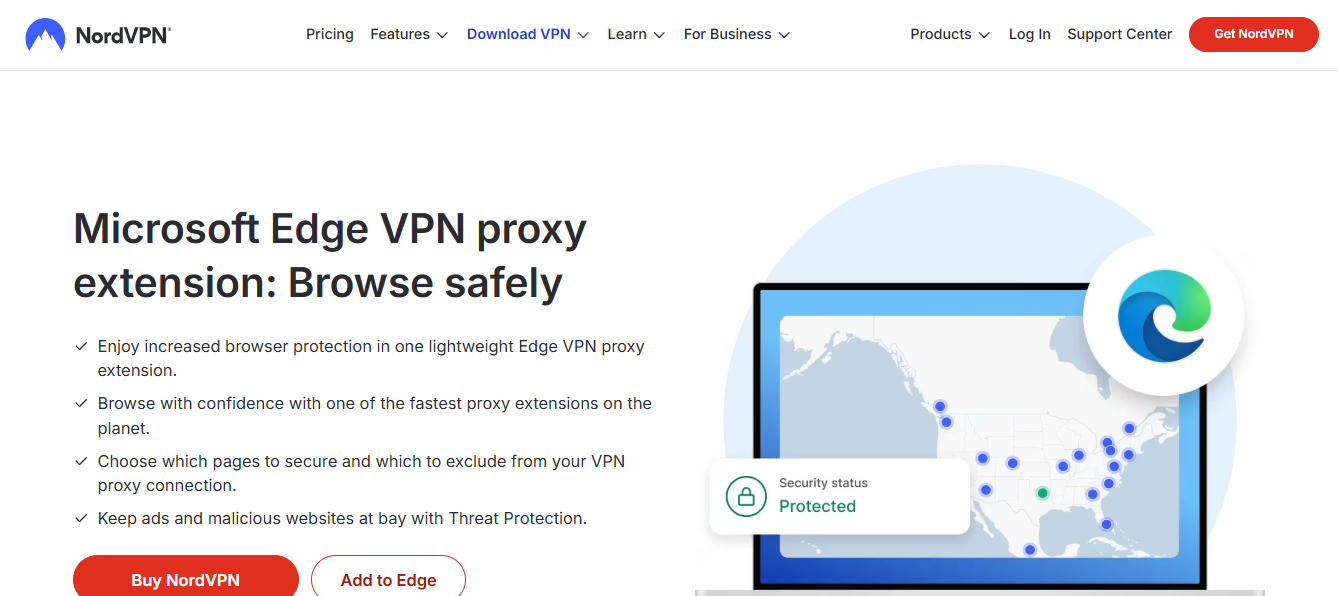
- In Edge, click the three dots menu > Extensions > Get extensions from Microsoft Store or search for the extension in the Edge Add-ons store.
- Step 3: Install the extension
- Click Add to Edge, then confirm the permissions the extension requests.
- Step 4: Log in and configure
- Create an account if required, or sign in with your existing VPN credentials.
- Adjust settings: enable auto-connect, choose a default server, enable kill switch, and turn on DNS leak protection.
- Step 5: Connect and verify
- Select a server in the country you need, click Connect.
- Verify your IP and location have changed by visiting a site like whatismyipaddress.com.
- Step 6: Enable best security practices
- Turn on the kill switch, enable DNS leak protection, and disable WebRTC if your extension supports it.
- Step 7: Regular maintenance
- Update the extension regularly, review permissions after updates, and rotate credentials if needed.
Setup tips for better security and performance
- Use a reputable VPN with a no-logs policy and independent audits.
- Prefer WireGuard-based extensions for speed and strong security.
- Avoid extensions that require broad system permissions; edge extensions should minimize what they access.
- Enable the edge extension’s auto-connect on startup if you want protection from the moment you browse.
- Check for DNS leaks after installation by visiting dnsleaktest.com and ensuring results show the VPN’s DNS servers.
- If you stream geo-restricted content, switch to a server known to have decent speed for HD video.
Common problems and fixes
- Problem: Extension won’t connect
- Fix: Try a different server, restart Edge, re-login, or reinstall the extension. Check for service outages on the provider’s status page.
- Problem: Slow browsing
- Fix: Connect to a closer server, switch protocol if available, or disable other bandwidth-heavy extensions.
- Problem: WebRTC leaks
- Fix: Use a VPN with WebRTC protection and disable WebRTC in Edge’s settings if the extension doesn’t provide an option.
- Problem: DNS leaks
- Fix: Ensure DNS leak protection is ON in the extension. Flush DNS on your device and retest.
- Problem: Kill switch not engaging
- Fix: Check extension permissions and try a different server. Some extensions require a manual enablement of the kill switch feature.
Security best practices for the Edge VPN extension
- Use a robust, audited provider and avoid free VPN extensions with weak privacy policies.
- Keep Edge and the extension updated to patch security flaws.
- Review the extension’s permissions before installing; only grant necessary access.
- Don’t tunnel all traffic if you don’t need to; use split tunneling to keep some sites outside the VPN for speed.
- Regularly clear browser cookies and update your password manager credentials.
Edge-specific tips
- Edge workspaces and profiles: If you use multiple profiles, set the VPN extension per profile to avoid conflicts.
- Edge’s built-in tracking prevention: Pair your VPN extension with Edge’s tracking prevention settings for extra privacy.
- Keyboard shortcuts: Some extensions support shortcuts; set one up for quick on/off.
Compare popular VPN extensions for Edge at-a-glance
- Extension A
- Pros: Strong encryption, low latency, good privacy policy.
- Cons: Smaller server list.
- Extension B
- Pros: Large server network, good for streaming.
- Cons: Occasional reliability issues on some servers.
- Extension C
- Pros: User-friendly, free tier available.
- Cons: Free tier may have data caps or slower speeds.
- Extension D
- Pros: Advanced security features, kill switch.
- Cons: Higher price.
- How to choose
- Prioritize privacy policy, audit status, server variety, speed, and price. For beginners, start with a trusted brand with a straightforward interface.
Setup vs. full VPN app
- VPN extension: Great for quick protection on Edge and light browsing needs.
- Full VPN app: Provides system-wide protection, which is better for all apps and services, not just Edge.
- If you mainly browse in Edge and want quick access to geo content, extensions are often enough.
Best practices for streaming and gaming
- For streaming, pick a server in the country where the content is available and ensure the VPN supports streaming with minimal buffering.
- For gaming, choose low-latency servers; some providers offer gaming-optimized modes.
- Use a wired connection when possible to reduce packet loss and improve stability.
Data privacy and policy considerations
- Always review the provider’s privacy policy for data collection, retention, and sharing practices.
- Look for independent audits or third-party reviews confirming privacy claims.
- Avoid providers that log user activity or sell data to third parties.
Performance and speed expectations
- VPN speeds depend on server distance, encryption overhead, and the provider’s backbone.
- WireGuard-based extensions typically offer better speed and stability than older protocols.
- Real-world expectations: expect some slowdown often 5-40% depending on server selection and baseline bandwidth.
Advanced features worth considering
- Split tunneling: Route only certain traffic through the VPN.
- Multi-hop: Route traffic through two VPN servers for extra privacy.
- Obfuscated servers: Helpful in restrictive networks to hide VPN use.
- Auto-reconnect and watchdogs: Reconnect automatically if the connection drops.
Step-by-step quick-start checklist
- Pick a reputable VPN extension for Edge.
- Install from the Edge Add-ons store.
- Sign in and grant necessary permissions.
- Enable security features: kill switch, DNS leak protection, WebRTC safeguards.
- Connect to a server suitable for your needs.
- Verify IP, DNS, and location changes.
- Enable auto-connect if you want protection from startup.
- Regularly update extension and review permissions.
Formatting tips for YouTube video content for context
- Hook in the first 15 seconds: state the key benefit and one quick setup tip.
- Use on-screen text to reinforce steps.
- Include a table of server options and speeds to help viewers compare.
- Show a quick live demo: install, connect to a server, and verify your IP.
- End with a short FAQ recap and a call-to-action to like, subscribe, and try a recommended extension.
Potential pitfalls to avoid
- Relying on free extensions with poor privacy policies.
- Not checking for DNS leaks or WebRTC leaks after setup.
- Ignoring extension updates that fix security issues.
- Assuming all VPNs work equally well for streaming; some are blocked by streaming services.
Quick test you can perform after setup
- IP check: whatismyipaddress.com should show a different location than your real one.
- DNS test: dnsleaktest.com should show the VPN’s DNS servers.
- WebRTC test: search for a WebRTC leak test and verify no IP leaks through WebRTC.
Case studies and real-world scenarios
- Remote workers: Using Edge VPN extensions to protect sensitive browsing on public Wi-Fi.
- Travelers: Access home country sites while abroad without changing device-wide VPNs.
- Privacy-conscious users: Combining Edge VPN with privacy-focused browser settings for improved anonymity.
Troubleshooting quick-reference
- If Edge slows down after activation, try a lighter server or switch to a different protocol.
- If a site doesn’t load, disable the VPN for that site or use split tunneling.
- If the extension crashes, reinstall and check for compatibility with the latest Edge version.
FAQ Section
How do I set up a VPN extension in Microsoft Edge?
Install the extension from the Edge Add-ons store, sign in, configure settings kill switch, DNS protection, and connect to a server. Verify by checking your IP and DNS.
Are VPN extensions secure to use in Edge?
Yes, when you use a reputable provider with strong encryption, a no-logs policy, and features like kill switch and DNS protection. Always review permissions.
Do VPN extensions affect all my traffic on Windows?
No, most browser extensions only protect traffic within the browser. For system-wide protection, use a full VPN app.
Can I use the VPN extension for streaming?
Yes, many extensions offer servers optimized for streaming. If one server doesn’t work, switch to another nearby server or change the protocol if available.
What if the VPN extension won’t connect?
Try a different server, restart Edge, re-login, or reinstall the extension. Check for service outages on the provider’s status page. Purevpn extension chrome setup and optimization for secure browsing, geo-spoofing, and fast streaming 2026
How do I verify my VPN is working?
Visit whatismyipaddress.com to confirm your IP has changed and dnsleaktest.com to check DNS leakage. Also, run a WebRTC leak test if needed.
Is split tunneling available in Edge extensions?
Some extensions offer split tunneling; check the extension’s settings. If available, you can route only specific sites through the VPN.
Can I use multiple Edge extensions at once?
You can have multiple extensions, but they may conflict. It’s best to use one trusted VPN extension at a time.
Do free VPN extensions exist, and are they safe?
Free extensions exist but often come with data limits or weaker privacy policies. For sensitive tasks, choose a paid, reputable provider.
How often should I update the VPN extension?
Keep it up-to-date to benefit from security patches and new features. Enable automatic updates if possible. Nordvpn edgerouter 2026
What is a kill switch, and do I need it?
A kill switch stops all browser traffic if the VPN disconnects, preventing IP leaks. It’s highly recommended.
How can I improve privacy beyond a VPN extension?
Pair your VPN with private browsing, blocking trackers, using HTTPS-only sites, and a strong password manager. Consider privacy-focused DNS and disabling WebRTC leaks if your extension doesn’t handle it.
Setup vpn extension microsoft edge: complete guide to installing, configuring, and securing a VPN extension in Microsoft Edge for private browsing, streaming, and safer web
Yes, you can set up a VPN extension in Microsoft Edge by installing a trusted extension from the Edge Add-ons store and configuring it. In this guide you’ll get a practical, step-by-step path to choosing a good Edge VPN extension, installing it, tweaking settings for privacy and performance, and troubleshooting common issues. You’ll also see why a browser extension can be a great first step—plus when you might want a full device-wide VPN instead. This post includes a quick comparison of popular Edge VPN extensions, best practices for privacy, and a handy FAQ to answer the most common questions.
- Choose a reputable VPN with an Edge extension
- Install the extension from the Edge Add-ons store
- Sign in and grant necessary permissions
- Pick a server location and connect
- Verify your new IP and DNS protection
- Consider features like split tunneling, auto-connect, and a kill switch
- Test performance and leaks, and troubleshoot common issues
If you want extra security and faster speeds, consider NordVPN with a current deal. NordVPN — 77% OFF + 3 Months Free banner below, click to save:
Useful URLs and Resources: Microsoft edge proxy interfering with vpn 2026
- Edge Add-ons store
- Microsoft Edge Help and Support
- NordVPN
- ExpressVPN
- Surfshark
- ProtonVPN
- IPLeak.net
- DNSLeakTest.com
- PrivacyTools.io
Why you might want a VPN extension in Edge
Today’s online world values privacy and access. A VPN extension for Edge helps you:
- Protect your browser traffic without configuring a separate app for every device you own
- Bypass geo-restrictions for streaming and research content
- Hide your real IP address when you're on public Wi-Fi
- Add an extra layer of privacy while you browse, reducing tracking from advertisers
A lot of people treat Edge extensions as a quick privacy boost for everyday browsing. Since Edge is now Chromium-based, most VPN providers follow with extensions that plug directly into the browser, making setup fast and straightforward. While a browser extension isn’t the same as a device-wide VPN client, it’s a practical, low-friction option for protecting traffic inside the browser, which is where most of our browsing happens.
Industry context: the VPN market has seen continued growth as people seek privacy online and more flexible access to global content. Analysts estimate the market to be in the tens of billions of dollars with hundreds of millions of regular users worldwide. While numbers vary, the takeaway is clear: a browser extension is a common-sense addition to your privacy toolkit, especially if you primarily browse with Edge on one device.
How VPN extensions for Edge work
- Edge extensions sit in your browser and route traffic from the browser through a VPN server when you’re connected.
- Some extensions implement a browser-level kill switch terminating connections if the VPN drops to prevent unencrypted traffic leaking into your browser.
- Browser extensions often offer split tunneling, letting you decide which sites or apps use the VPN tunnel and which don't.
- Extensions rely on the VPN provider’s servers and their own encryption standards usually AES-256 to protect data in transit.
- It’s important to note that a VPN extension typically protects only traffic within the Edge browser, not all your device’s network traffic. If you want system-wide protection, you’ll want the provider’s standalone app or a router-level VPN.
What to expect in practice:
- Quick install and immediate protection for Edge traffic
- Some providers offer additional browser-agnostic features multi-device login, centralized settings through their account dashboard
- If you need to protect other apps like a desktop app or games, you may need the provider’s full VPN app in addition to the Edge extension
Step-by-step: Set up a VPN extension in Microsoft Edge
- Pick a VPN provider with a reliable Edge extension
- Look for a provider with a proven no-logs policy, strong encryption, a kill switch, and DNS leak protection
- Favor providers with well-rated Edge extensions and good performance
- Examples: NordVPN, ExpressVPN, Surfshark, ProtonVPN these are commonly available as Edge extensions
- Open Microsoft Edge and access the Add-ons store
- In Edge, click the menu three dots > Extensions > Get extensions from Microsoft Edge Add-ons
- If you’re using Edge in private browsing, you may need to enable “Allow extensions from other stores” in some cases, though most reputable providers publish in the official store
- Find the VPN extension for your provider
- Use the search box to locate your VPN extension by name e.g., “NordVPN”
- Read quick reviews and check permissions before installing
- Install the extension
- Click Add to Edge, then confirm the installation
- Edge will add a small VPN icon to the toolbar
- Sign in and grant permissions
- Open the extension from the toolbar and sign in with your VPN account
- You’ll typically be asked to grant permissions to manage tabs, read and change data on websites, and create network connections
- Decide if you want the extension to work in private windows. enabling this catches more traffic, but consider your privacy stance
- Choose a server location and configure preferences
- Pick a server location based on purpose privacy, latency, or content access
- Some extensions offer quick-connect to a recommended server, auto-connect on startup, and options like kill switch, DNS protection, and split tunneling
- Connect and verify your connection
- Click the Connect button
- Verify your IP address changed and DNS is not leaking
- A quick test: visit ipinfo.io or whatismyipaddress.com to confirm the location and IP show the VPN server, not your real one
- Test features like split tunneling and kill switch
- If your extension supports split tunneling, configure it to route only Edge traffic for sensitive sites through the VPN
- If there’s a built-in kill switch, test it by temporarily disabling the VPN to ensure Edge stops traffic when the VPN drops
- Privacy and security checks
- Confirm there’s a no-logs claim in the policy, and ensure encryption is AES-256 or equivalent
- Check whether IPv6 is blocked or handled safely to prevent leaks
- Turn on DNS leak protection if your extension offers it
- Use cases and limitations
- Browser extensions are great for everyday browsing, streaming, and quick privacy boosts
- If you need device-wide protection for all apps, games, and OS-level services, install the provider’s standalone app or configure a router-based VPN
Practical tips for Edge VPN extensions
- Enable auto-connect on startup so Edge is protected right away.
- Use a server location that isn’t too far away to minimize latency, unless you’re specifically looking to bypass region blocks.
- Consider split tunneling for streaming on certain sites while keeping your banking or login sessions outside the VPN for performance.
- If you experience buffering or slow speeds, switch servers or try a different protocol if your provider offers options like OpenVPN, WireGuard, or IKEv2.
- Use a separate privacy tool for DNS and tracker blocking if you want an additional layer beyond the VPN.
Edge extension vs. standalone VPN app
- Edge extension protects only browser traffic. a standalone VPN app covers all network traffic on the device
- The extension is quick and convenient for casual browsing and streaming in Edge
- A standalone app is a better choice if you need device-wide privacy, VPN on apps outside Edge, or a robust kill switch that protects all traffic
- Some providers offer both. in practice, many users run the Edge extension for daily browsing, and use the full app for sensitive sessions or when on public networks
Edge-specific privacy and security best practices
- Always verify you’re connected to a reputable server and that your IP shows the desired location
- Review the provider’s privacy policy and no-logs claims. verify independent audits if available
- Enable DNS leak protection to prevent your DNS requests from leaking to your ISP or other networks
- Use two-factor authentication 2FA on your VPN account to secure access
- Keep Edge and the VPN extension up to date to protect against known vulnerabilities
- Be mindful of browser fingerprinting. a VPN helps with IP masking but other tracking methods still exist
Common pitfalls and troubleshooting
- Extension not appearing in Edge after installation: restart Edge or reinstall the extension. ensure the extension is enabled in Edge Extensions settings
- VPN connects but pages don’t load: switch to a different server. check for firewall restrictions or antivirus software that may block VPN traffic
- DNS leaks: run a DNS leak test and enable DNS leak protection in the extension if available
- Kill switch not working: confirm the feature is enabled in settings. test by disconnecting the VPN and checking if traffic stops
- Private window issues: ensure you granted permissions for private browsing if you want protection there
- Performance hit: try a lighter server or protocol e.g., WireGuard and optimize Edge performance by disabling unused extensions
Advanced tips for getting the most out of Edge VPN extensions
- Use split tunneling to route only Edge traffic through the VPN while leaving other apps on your normal connection for speed
- Pick servers near your actual location for quick latency, or far-away servers for content access and additional privacy
- Regularly review your trusted locations and remove servers you don’t use to keep your options clean
- If you’re streaming, test multiple servers within the same region for best balance of speed and stability
- Combine with privacy-conscious browser settings: block third-party cookies, enable tracking protection, and clear cookies regularly
Frequently asked questions
What is a VPN extension for Edge?
A VPN extension for Edge is a browser-based add-on that routes Edge’s traffic through a VPN server, providing IP masking and encryption specifically for browser activity. It’s a convenient way to protect your Edge browsing without installing a full system VPN. Microsoft vpn edge 2026
How do I install a VPN extension in Edge?
Open Edge, go to Extensions > Get extensions from Microsoft Edge Add-ons, search for your chosen VPN, click Add to Edge, sign in, grant permissions, and connect to a server.
Can I use a VPN extension for free?
Some providers offer free tiers or limited trials, but paid VPNs typically provide stronger protection, better performance, and more features. Free extensions may have usage caps, slower speeds, and more intrusive data collection.
Do VPN extensions encrypt all traffic?
VPN extensions primarily protect Edge traffic. They won’t secure traffic from other apps on your device. For full-device protection, use the VPN provider’s standalone app or configure a system-wide VPN.
Will a VPN extension slow down my browsing?
Sometimes, yes. VPNs add overhead due to encryption and routing. Server distance, server load, and protocol choice affect speed. If you experience slowdowns, try a closer server, a different protocol, or a different VPN provider.
Can I use a VPN extension for streaming in Edge?
Yes, many VPN extensions are tuned for streaming. You’ll want a server in a region that supports the service you’re trying to access, plus a fast connection to reduce buffering. J. edge review 2026
How do I test if the VPN extension is working?
Check your IP address on sites like ipinfo.io or whatismyipaddress.com after connecting the VPN. The reported location should match your chosen server, not your real location. Also test for DNS leaks via dnsleaktest.com or IPLeak.
Is there a kill switch in Edge VPN extensions?
Some extensions include a kill switch that blocks traffic if the VPN disconnects. If your extension lacks this, you may want to rely on the provider’s standalone app for stronger protection.
Is it safe to use free VPN extensions?
Free VPNs often come with trade-offs like limited data, slower speeds, ads, or questionable privacy practices. If you’re serious about privacy, a paid, reputable provider is usually a better choice.
Should I use an Edge extension or a full VPN app?
For most casual browsing, a well-regarded Edge extension is convenient and effective. If you need device-wide protection, use the full VPN app or enable a router-based VPN for all devices on your network.
How do I enable Edge extension in private windows?
Many extensions offer an option to work in private browsing. In Edge, open the extension settings and toggle “Allow in private windows” if available, then restart the private window and connect. Pia vpn firefox extension 2026
What should I do if the Edge extension keeps disconnecting?
Try a different server, switch protocols if available, or check your internet connection. If the problem persists, restart Edge, reinstall the extension, or reach out to the provider’s support.
Can I use multiple VPN extensions at once in Edge?
Most browsers don’t allow two VPN extensions to operate simultaneously due to routing conflicts. Pick one trusted extension per browser and disable others to avoid leaks or drops in performance.
Do VPN extensions protect against tracking beyond IP masking?
VPNs add encryption and mask IPs, but they don’t eliminate all tracking techniques. Combine a VPN with privacy-conscious browser settings, tracker blockers, and regular cookie management for better protection.
Will Edge’s auto-update affect my VPN extension?
In most cases, auto-updates are beneficial, bringing security patches and new features. If you rely on a particular server or feature, recheck settings after updates to ensure everything remains as you configured.
Is there guidance for using VPN extensions on mobile Edge?
Yes. The process is similar: install from the mobile app store’s extensions section, sign in, and connect to a server. Behavior and features may vary slightly between desktop and mobile builds. Tunnelbear vpn edge: a comprehensive guide to edge features, privacy, and performance in 2026
Final notes
Setting up a VPN extension in Microsoft Edge is a practical, fast way to boost privacy for daily browsing and streaming. It’s not a one-size-fits-all solution—if you need total device-wide protection or to secure apps outside Edge, pair the extension with the provider’s full VPN app or consider a router-based VPN. With thoughtful server choices and privacy-aware settings, you can enjoy safer, faster, and more flexible browsing in Edge.
Useful URLs and Resources text only:
- Microsoft Edge Help
Vpn使用方式:在各平台快速搭建与使用的完整指南